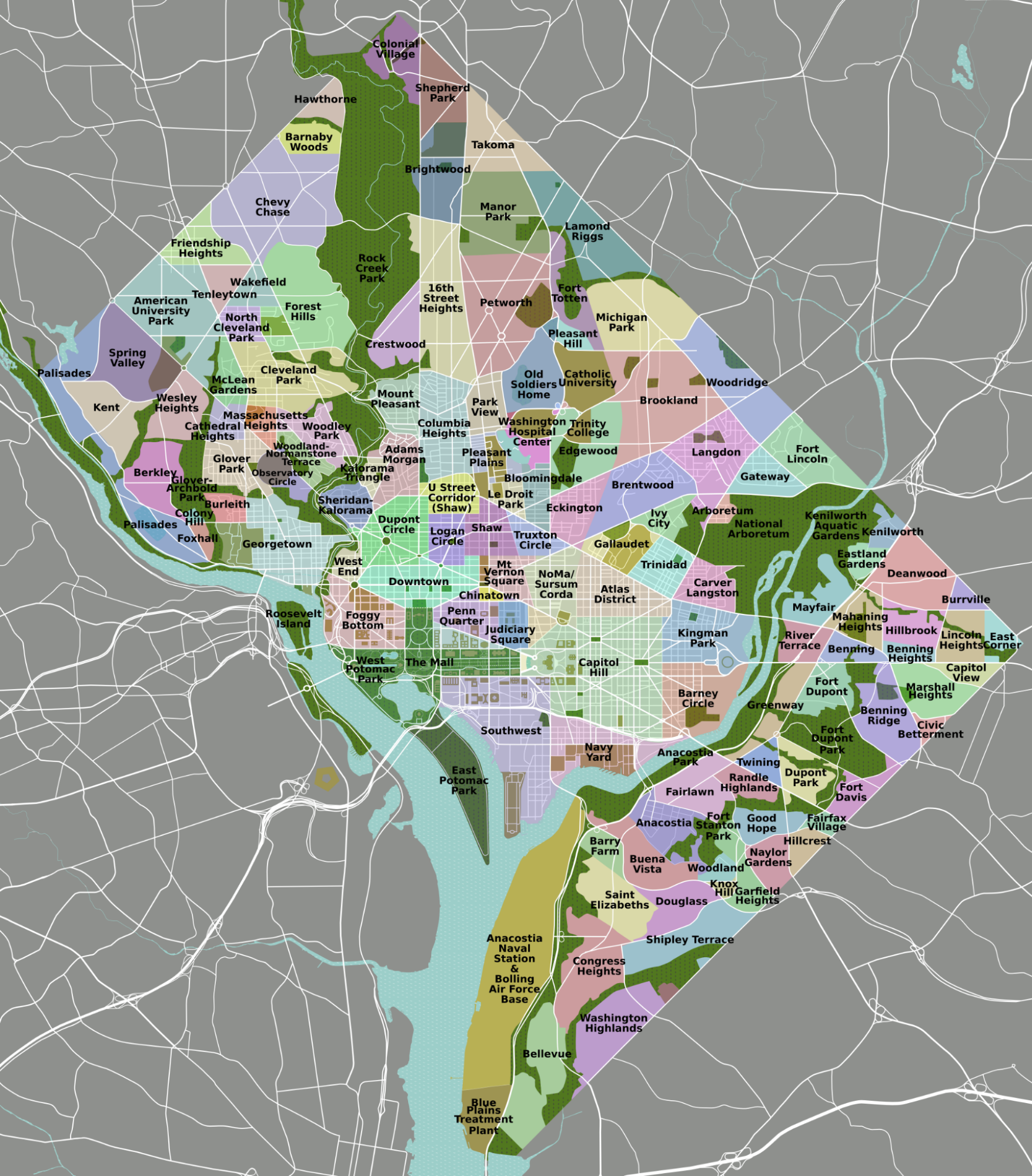
Washington, D.C.
Personal attention for injury claims in the District of Columbia.
Your Motor Vehicle Accident Claim
A collision can change your health, work and daily life in an instant. Understanding the claim process helps you make informed decisions. Here at Hoyle Law, we investigate the details, explain your options and prepare each case with the attention it deserves.
Our commitment
We pursue every reasonable avenue of investigation, insurance recovery, negotiation and litigation appropriate to your case. That may include witness interviews, records, subpoenas, expert analysis and court proceedings. We weigh the value of each step against its cost and your goals, keep you informed and work to obtain the strongest result the evidence and law support. No result can be guaranteed.
Thorough preparation and good communication work together. We explain what we are investigating, why a record or witness matters, and how a development may change the plan. Mr. Hoyle takes pride in helping clients understand complex issues and remain involved in the decisions that affect their case.
1. Your health and treatment come first
Seek appropriate medical care and follow your providers’ recommendations. Tell them accurately about your symptoms, earlier injuries and changes in your condition. Keep appointment records, bills, prescriptions and receipts. If access, cost or scheduling interrupts treatment, tell your provider and our firm. Treatment decisions belong to you and your medical professionals; they should be driven by your health.
Accurate records should describe your actual condition, including improvements as well as continuing problems. Keep track of how the injury affects ordinary activities, work duties, and household responsibilities. Share changes with your providers and our firm. The purpose is to document your experience faithfully and help us understand the impact of the injury.
2. Consultation, interviews and evidence gathering
We begin with your account of the collision and its effect on your life. We review photographs, crash reports, witness information, video, vehicle damage and available insurance. When warranted, we interview witnesses, seek preservation of recordings or electronic data and consult qualified experts. A crash report is useful evidence, but it does not settle every disputed fact.
Save original photos, messages and documents. Keep a factual record of symptoms, missed work and activity limitations. Do not delete relevant social media or other evidence. Give complete, candid information, including facts you think may hurt the claim, so we can address them early.
Bring insurance correspondence, prior statements about the collision, and information about any relevant earlier treatment. Let us know about recordings, nearby businesses, or witnesses who may have useful information, because some evidence may become unavailable with time. We help organize what you have and identify what still needs to be obtained.
3. Insurance, fault and common complications
We identify potentially responsible parties and examine available coverage. Uninsured or underinsured drivers, commercial vehicles, rideshare activity and multiple injured people can make coverage more complicated. Disputed fault, prior injuries and gaps in treatment require careful analysis. The applicable law and policy language matter, and deadlines may require action before treatment ends.
Mr. Hoyle’s familiarity with large, mid-sized, and smaller insurance companies across a wide range of injury cases informs his approach to coverage review and claim presentation. We examine the particular policy and facts, assess requests for information, and address the reasons given for a disputed claim. An insurer’s size does not replace a careful review of the evidence and available coverage.
D.C. personal injury protection (PIP). When D.C. PIP rules apply, the law generally requires notice to the PIP insurer of your election to receive benefits within 60 days of the accident; the period may be extended by mutual written agreement. Electing PIP can restrict a lawsuit against another responsible person unless a statutory exception applies, including specified serious injuries or medical and rehabilitation expenses or work loss exceeding available PIP benefits. We review the policy and your circumstances before recommending an election.
Deadlines need early attention. Many D.C. negligence claims generally have a three-year filing period from accrual, but different claims, exceptions, and notice requirements can change the deadline. Injury claims against the District of Columbia generally require qualifying notice within six months of the injury. Insurance deadlines may be shorter. Do not assume treatment or settlement discussions extend a deadline; seek advice promptly so the requirements for your particular claim can be checked.
4. Building the demand
A demand explains why the responsible party should pay and supports the requested compensation with evidence. Depending on the case, it may include medical records, expenses, wage documentation, photographs, future-care opinions and evidence of pain and limitations. We assess whether the record is developed enough to negotiate intelligently while monitoring filing deadlines.
A persuasive presentation connects the collision, the medical evidence, and the losses being claimed. We work to show the effect on your employment, daily activities, and recovery using specific, supportable information. Complete records and clear explanations help us address questions about causation, earlier conditions, or the need for continuing care.
5. Negotiation and informed decisions
An insurer may dispute fault, question treatment, request information or make an offer below the demand. We respond with evidence, explain the strengths and risks and discuss counteroffers with you. You decide whether to accept a settlement. Before that decision, we discuss fees, costs and known repayment obligations so you understand the projected net recovery.
Negotiation requires more than exchanging numbers. We examine why the parties disagree and whether additional evidence can address the gap. Mr. Hoyle discusses the practical tradeoffs with you, including the uncertainty, time, and expense of litigation. We keep you informed of offers and help you assess them in the context of your particular claim.
6. Filing a lawsuit: complaint and service
If a fair resolution cannot be reached, litigation may be appropriate. A complaint identifies the parties, states the allegations and requests relief. A summons provides formal notice of the suit and directs the defendant to respond. Proper service is a separate procedural step; filing alone does not complete it. We evaluate the proper court, deadlines and service requirements and address difficulties locating or serving a defendant.
Filing changes the process and introduces court requirements, formal deadlines, and additional work. We discuss your role, the records or information you may need to provide, and the stages that may follow. The pace depends on the court, the parties, and the issues; a lawsuit does not produce an immediate payment or a guaranteed outcome.
7. Discovery and depositions
During discovery, parties exchange relevant information through written questions, document requests and other permitted methods. Records and testimony help test each side’s position. A deposition is sworn testimony, usually recorded by a court reporter, with questions from attorneys. We prepare you for the process and review key facts and records. Answer truthfully, listen carefully, ask for clarification and avoid guessing. Preserve evidence and tell us promptly if an earlier response needs correction.
Preparation helps you understand the setting, the subjects likely to be discussed, and the importance of complete, accurate answers. We review the collision, your treatment, earlier conditions, work, and activity limitations with you. The goal is truthful testimony from your own knowledge. Tell us when you do not remember a fact or do not understand a question so it can be addressed clearly.
8. Mediation and pretrial proceedings
Mediation gives the parties an opportunity to negotiate with a neutral mediator. The mediator helps discussions but does not impose a settlement. We prepare a reasoned presentation, explain offers and help you evaluate resolution. If the case continues, motions, expert work, witness preparation and pretrial requirements may narrow the issues or affect whether it reaches trial.
Before mediation, we discuss the strengths of the evidence, the unresolved issues, the costs of continuing, and your goals for resolution. During the discussions, we explain changing offers and their effect on the projected amount you would receive. Preparation gives you a clearer basis for deciding whether a proposed settlement makes sense for you.
9. Trial and what follows
At trial, the parties present admissible evidence and testimony to the judge or jury. The decision depends on proof, the governing law and the issues allowed to proceed. We prepare exhibits, witnesses and arguments and explain the risks and practical demands. A verdict may be followed by further proceedings, an appeal or collection issues; payment is not always immediate.
Your participation may include reviewing important records and preparing to explain the collision and the injury’s effect on your life. We discuss the courtroom process and the issues the fact-finder will consider. Careful preparation remains essential, while the ultimate outcome depends on the evidence and the applicable law.
What drives case value?
Value depends on provable fault, causation, injury severity, recovery, permanency, reasonable medical expenses, lost income and the documented impact on your life. Credibility, experts, available coverage, legal defenses and litigation risk also matter. There is no reliable universal multiplier. Similar medical bills can produce different outcomes when the evidence or available recovery differs.
We evaluate the whole claim and explain the assumptions behind an assessment. A serious injury still requires proof of responsibility and a connection to the incident, and an offer must be considered alongside the available coverage and practical ability to recover. Thoughtful evaluation allows a discussion of both the opportunity and the uncertainty.
Settlement funds and medical repayment
A settlement amount is different from the amount you receive. Attorney fees, case costs, unpaid bills and valid liens or reimbursement claims may affect your recovery. We review those issues, seek appropriate reductions where available and explain the accounting. Some final determinations can take time before funds may be distributed.
Our contingency fee at Hoyle Law is 33% before a lawsuit is filed and 40% once a lawsuit is filed, subject to the written fee agreement. Typical costs can include records, filing and service fees, depositions, experts, and mediation. We help you understand how the agreement and any applicable medical repayment obligations affect the final accounting, and discuss questions before you make a settlement decision.
Clear guidance at every stage
Not every claim follows every step, and timing varies. Our role is to explain the next decision, prepare thoroughly, and keep your individual needs central to the strategy. We maintain a high level of communication, welcome questions, and help you understand the legal, medical, and insurance issues as they arise.
You can help by keeping contact information current, sharing new treatment records or insurance letters, and telling us about changes in your condition or work. We explain what is needed and why. Here at Hoyle Law, we take pride in turning a complicated process into a series of decisions you can understand and approach with confidence.
Discuss your claim with Hoyle Law: (202) 344-9721 or kalynhoyle@gmail.com. A free consultation can help identify the information needed to evaluate your circumstances.
This guide provides general information, not advice for a particular claim. Contacting Hoyle Law does not create an attorney-client relationship. Please do not send confidential details until representation is confirmed.